 0000 332 2680
  Book Online
 Login MyRed

EMERGENCY STOP
Learn to stop safely, quickly and in control.
The emergency stop tests your ability to react instantly and bring the car to a halt without skidding. Our guide covers the correct technique, what the examiner looks for, and how to practise.
BOOK ONLINE
What is an emergency stop?
An emergency stop is a technique for bringing your vehicle to a halt as quickly and safely as possible in response to a sudden hazard. On the practical driving test, approximately one in three candidates is asked to perform an emergency stop. The examiner will give you a signal — usually raising their hand — which is your cue to stop promptly as if a child had run into the road.
How to perform an emergency stop
When the examiner gives the signal, react immediately. Apply firm, progressive pressure to the footbrake — push hard. Keep both hands on the steering wheel and do not signal. Avoid locking the wheels or braking so hard that you skid (most modern cars have ABS which prevents this). The clutch should be pressed down just before the car stops to prevent stalling, but braking comes first.

React Immediately
There is no time to check your mirrors before an emergency stop. React the moment you see the hazard — mirrors come afterwards.

Brake First
Apply firm pressure to the brake as your first action. Do not dip the clutch at the same time — it reduces braking effectiveness.

ABS & Skid Prevention
Modern cars with ABS allow you to maintain steering while braking hard. If the pedal pulses, keep pressing — that is the ABS working.

Keep the Car Straight
Keep both hands on the steering wheel and steer straight during the stop. Do not swerve unless there is a specific hazard to avoid.
After the Stop
Once stopped, apply the handbrake and select neutral. Check mirrors and blind spots before moving off again.

Practice Makes Perfect
Practise the emergency stop in quiet areas at different speeds with your instructor until the technique is automatic.
Emergency stop on the driving test
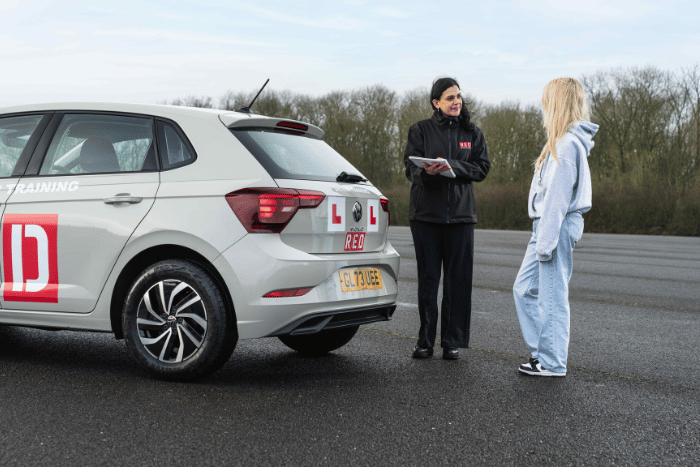
The examiner will explain the procedure before the test begins. They will choose a safe, quiet road. When they give the signal, stop as quickly and safely as you can. Candidates sometimes lose marks for being too gentle — a truly prompt stop is expected. The examiner wants to see that you can bring the car to a halt in an emergency without panicking.
Practise with a RED instructor
Your instructor will rehearse the emergency stop with you during lessons so it feels natural on test day.
Emergency Stop FAQs
Will I definitely get an emergency stop on my test?
Should I check my mirrors before an emergency stop?
Can I fail for not stopping quickly enough?
Does ABS mean I just stamp on the brake?
You may also be interested in
Practical Driving Test
Full guide to what happens on your driving test day — manoeuvres, faults and more.
Read more
Driving Test Faults
Understand the difference between minor, serious and dangerous faults on your test.
Read more
Mirror Signal Manoeuvre
Learn the routine that keeps you safe at every stage of every drive.
Read more